
Blog

Workelect vs Simpro: Which Field Service Software Is Right for You?

20 Apr 2026 - 5 min read - Workelect Team

Introduction

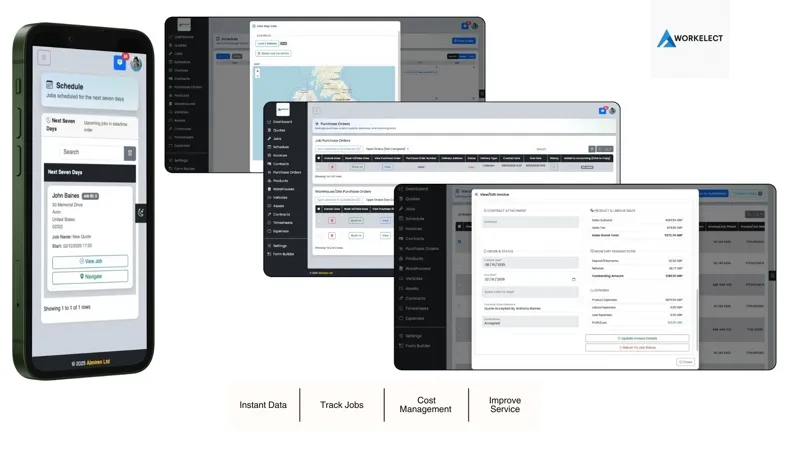
Workelect field execution, stock, and operations planning view - Almiren bespoke builds

If you are comparing Workelect and Simpro, you are likely running a serious field service operation rather than a very small team.

Both platforms offer full field service management capabilities, including scheduling, job tracking, inventory, and reporting. But they are built for different levels of scale and a different operational philosophy.

The key question is this: do you need a highly structured, end-to-end system for complex operations, or a more focused platform built around real-world job execution and inventory control?

If you are evaluating the wider field service management software market, it helps to focus on whether your biggest challenge is enterprise-level planning or reliable field execution.

Quick summary

  • Choose Workelect if your priority is inventory visibility, asset tracking, and job readiness.
  • Choose Simpro if you need a deep, enterprise-level system for managing complex projects and operations.

Who Workelect is for

Workelect is designed for growing service businesses dealing with operational complexity, especially around stock and assets.

  • Teams managing stock across vans and warehouses.
  • Businesses that need real-time visibility of parts and job readiness.
  • Operations that want to reduce failed jobs and repeat visits.

Businesses exploring field service inventory management, van stock management software, and warehouse and van stock management are typically closer to Workelect's strengths.

In short: inventory-driven, scaling businesses.

Who Simpro is for

Simpro is built for larger, more complex service operations, especially in trades such as electrical, HVAC, and construction.

  • Businesses managing large volumes of jobs or projects at the same time.
  • Teams that need advanced workflows, reporting, and financial tracking.
  • Operations requiring one system that covers quoting, job management, and project oversight.

In short: large, operations-heavy, or project-based businesses.

Scheduling and job management

Both platforms provide full scheduling, dispatching, job tracking, and real-time updates between the field and the office.

Simpro leans further into advanced scheduling, drag-and-drop planning, resource visibility, and coordination across teams, locations, and projects. Workelect offers fully capable scheduling too, but puts more emphasis on ensuring jobs are properly resourced with the right stock and assets before execution.

If scheduling is central to your evaluation, it is also worth exploring Workelect's approach to field service scheduling software and dispatch software.

Inventory and stock control

This is a key area where the two platforms differ in emphasis.

  • Workelect offers strong warehouse and van stock tracking.
  • Workelect gives teams real-time inventory visibility.
  • Workelect is built to ensure jobs have the right parts before work starts.
  • Simpro includes comprehensive inventory management within the wider platform, including stock levels, pricing, and supplier data.

The real difference is not whether inventory exists in the system, but how central it is to execution. Simpro treats inventory as part of a larger business platform, while Workelect ties inventory more directly to job readiness and field delivery. You can explore more on field service parts inventory, service parts management, and our related article on van stock app benefits.

Reporting, financials, and project management

Simpro is the stronger fit when your priority is advanced reporting, job costing, project tracking, and financial insight across the business.

Workelect is more focused on operational visibility around stock, assets, and readiness and puts less emphasis on deep financial and project analytics.

If you are comparing specialist stock control against broader end-to-end FSM systems, our Workelect vs generic field service software comparison is another useful reference point.

CRM and business workflows

Simpro also offers broader CRM and workflow coverage, including customer history, quoting, invoicing, contracts, and more complete business process support.

Workelect is more focused on execution and logistics and is less centred on full CRM or sales workflows.

Complexity and setup

The trade-off here is power versus focus.

AreaWorkelectSimpro
Setup timeMediumHigh
Learning curveModerateHigh
FlexibilityFocusedVery high

Simpro is significantly more powerful overall, but it is also more complex to implement and manage.

The real difference

At a feature level, both platforms are strong. The real difference is what they are designed to optimise.

  • Simpro is built to manage entire business operations and complex projects at scale.
  • Workelect is built to ensure jobs can actually be completed efficiently in the field.

That means Simpro helps you plan, manage, and analyse everything, while Workelect helps you execute work without delays or missing resources.

When to choose Workelect

  • Inventory issues cause delays or repeat visits.
  • You manage stock across vans and warehouses.
  • You want better visibility of job readiness and assets.
  • Your biggest problem is execution in the field rather than planning.

When to choose Simpro

  • You run large or complex operations.
  • You need detailed job costing, reporting, and financial tracking.
  • You manage projects, contracts, and multiple workflows.
  • You want one system that handles everything in one place.

Pros and cons

Workelect

Pros

  • Strong inventory and asset tracking.
  • Real-time operational visibility.
  • Designed for field execution and logistics.

Cons

  • Less depth in reporting and financials.
  • Not as broad across full business workflows.

Simpro

Pros

  • Extremely comprehensive platform.
  • Strong project management and reporting.
  • Covers end-to-end business operations.

Cons

  • Complex to implement and use.
  • Can be overwhelming for smaller or mid-sized teams.

Final verdict

Both platforms are powerful, but they serve different needs.

Choose Workelect if your priority is inventory control, job readiness, and efficient field execution.

Choose Simpro if your priority is managing complex operations, projects, and financial performance at scale.

Simpro helps you run a large, complex service business from end to end. Workelect helps you ensure that work gets done efficiently, with the right parts, at the right time.

That difference becomes critical as your business grows. If you want to explore more, start with Workelect, browse the wider Workelect blog, or read our other comparisons on Workelect vs Commusoft and Workelect vs BigChange.

FAQ

Workelect is usually the stronger fit when inventory visibility, van stock, and job readiness are the main operational priorities.

Simpro is generally the stronger fit when project management, job costing, reporting, and broader operational scale are the main priorities.

Yes. Both platforms support core scheduling and job management, but they emphasise different levels of scale and operational control.

The clearest difference is operational focus: Workelect is more centred on field execution and stock readiness, while Simpro is more centred on end-to-end business management at scale.

Share

Share this blog post

Related posts

20 Apr 2026 - 4 min read

Best Field Service Management Software (FSM) in 2026: Complete Comparison Guide

A UK-focused guide to the best field service management software in 2026, comparing simple, mid-market, and enterprise FSM tools.

Read more ->

20 Apr 2026 - 5 min read

Workelect vs Tradify: Which Field Service Software Is Right for You?

A practical comparison of Workelect and Tradify across job management, inventory control, quoting, and operational scale.

Read more ->

20 Apr 2026 - 5 min read

Workelect vs Workever: Which Field Service Software Is Right for You?

A practical comparison of Workelect and Workever across job management, inventory control, invoicing, and operational scale.

Read more ->