
Solution

Dispatch Software

Give dispatchers a clearer picture of job bookings, stock, and readiness so jobs can move with fewer surprises.

Primary: dispatch software field service dispatch software field service booking software field service scheduling software

Why teams choose Workelect

  • Help dispatch teams make faster, better-informed decisions.
  • Reduce friction between job bookings, stock control, and field execution.
  • Keep dispatch software workflows tied to the realities of the day’s operation.

Built for operations

Run dispatch software with one clearer operating view.

Workelect keeps warehouse stock, van stock, job bookings, assets, and readiness aligned so teams spend less time chasing updates.

Dispatch with live visibility

See booking detail, stock status, and readiness signals in one operating view.

Reduce coordination overhead

Keep warehouse, planning, and field teams working from the same information.

Respond faster to changes

Spot exceptions early and re-plan with fewer manual handoffs.

Deep dive

Dispatch Software guide for operations teams.

Detailed guidance for teams evaluating process improvements before software rollout.

Why dispatch software gets harder as teams scale

Growth increases job volume, field movement, and operational dependencies. Without integrated visibility, planners and engineers spend more time resolving uncertainty than delivering planned work.

See booking detail, stock status, and readiness signals in one operating view. This is where structured workflows outperform spreadsheet-led coordination, especially when multiple teams share stock and scheduling responsibility.
Operational gaps to close first

The highest-impact improvements are usually simple: clearer stock ownership, earlier readiness checks, and stronger handoffs between planning and field teams.

Keep warehouse, planning, and field teams working from the same information. When these controls are standardised, delivery quality improves and avoidable friction drops across the whole operation.

How teams measure progress with dispatch software

Track repeat visits, stock-driven delays, emergency purchasing, and planner rework. These measures expose execution quality far better than high-level output totals alone.

As process stability improves, teams usually see predictable gains: help dispatch teams make faster, better-informed decisions. and reduce friction between job bookings, stock control, and field execution.. Those outcomes are what make software investment commercially meaningful.

Operating profile

Where dispatch software has the biggest impact.

A practical profile of team shape, delivery pressure, and the buying trigger behind this workflow.

Best-fit team

Dispatch centres coordinating fast-moving field operations and reactive demand.

Daily job mix

Emergency callouts, priority changes, engineer reassignment, and live customer updates.

Most common bottleneck

Dispatchers lack a single view of capacity, readiness, and stock constraints.

Buying trigger

Response speed targets are missed due to fragmented operational data.

Workflow sequence

How teams run dispatch software day to day.

A concrete execution sequence from planning through close-out.

1. Queue by service priority

Sort inbound work by SLA impact and customer risk before assignment.

2. Match engineer and stock

Assign jobs where skill, location, and parts readiness align.

3. Communicate status live

Push updates to field and office teams as dispatch decisions change.

4. Review response performance

Measure queue age, dispatch latency, and handoff quality daily.

Operational KPIs

What to measure in the first 90 days.

Use these metrics to confirm whether process changes are improving delivery quality.

Dispatch response time

Target: Under 10 minutes for priority jobs

Fast response protects SLA and customer trust.

Queue age

Target: Reduce average age by 20%

Lower queue age indicates stronger dispatch flow control.

Priority reassignment rate

Target: Reduce by 15%

Fewer late reassignments reflect better first decisions.

Execution signals

What good implementation looks like.

Indicators teams use to validate that the new workflow is genuinely embedded.

  • Dispatch queue management includes readiness signals before assignment commit.
  • Priority decisions are tracked for post-incident and weekly review.
  • Live status updates reduce cross-team confusion during high-pressure periods.
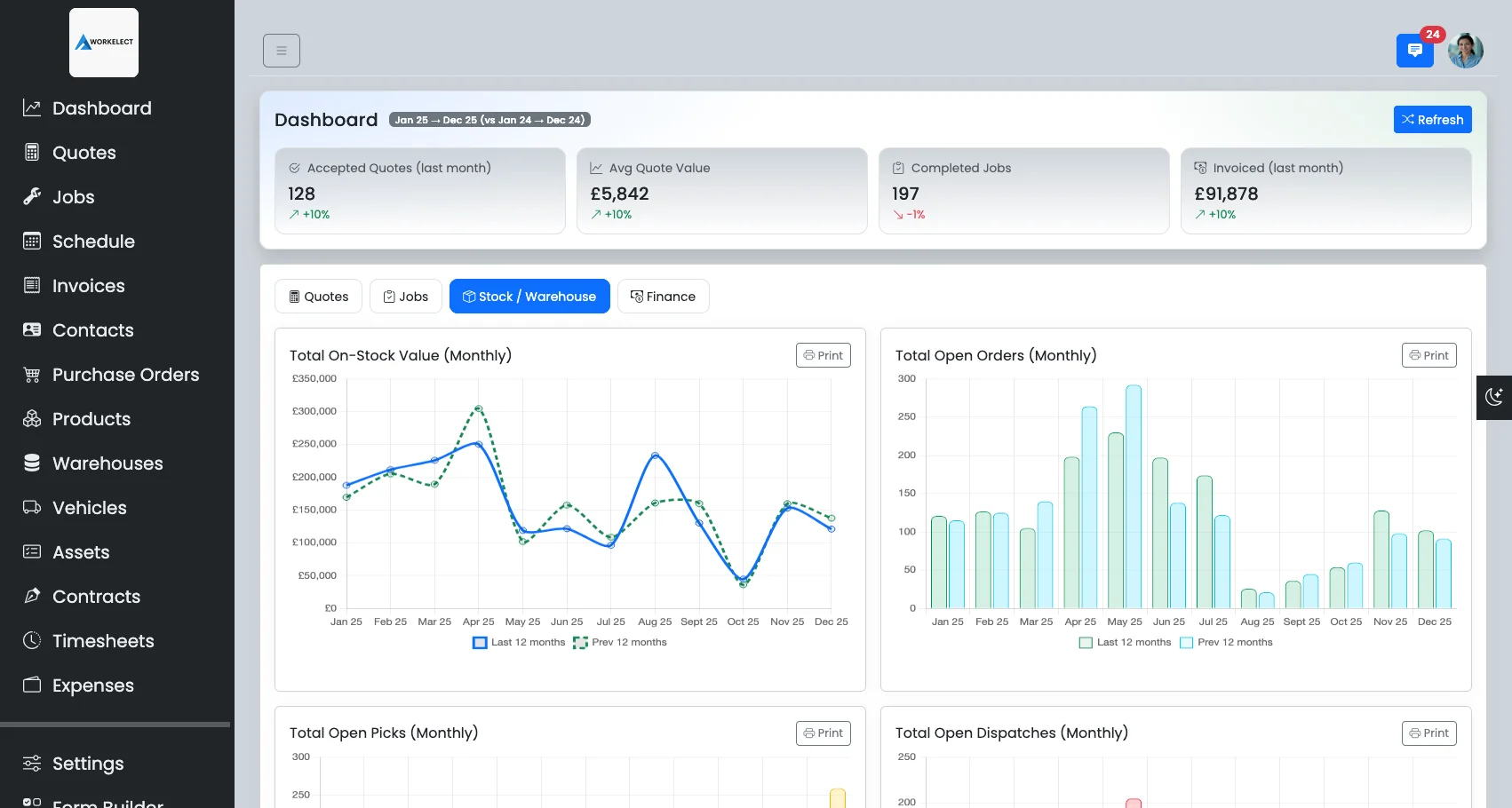
Dispatch Software dashboard preview

What this covers

Dispatch Software

Workelect helps teams connect stock visibility, booking control, and day-of-work readiness in one operational view.

  • field service dispatch software
  • field service booking software
  • field service scheduling software
  • van stock management software

FAQ

Dispatch Software questions

Short answers to common questions around this workflow.

Dispatch software is used by planners and coordinators managing mobile teams, job bookings, and day-of-work changes.

It combines dispatch visibility with warehouse stock, van stock, and readiness signals rather than treating dispatch in isolation.

Yes. Booking visibility is part of the core workflow.

See Workelect in action

Bring stock, job bookings, assets, and field readiness into one platform.

Start a 14 day trial or contact us to talk through your workflow.