Why field inventory breaks down as teams grow
Most service operations do not struggle because engineers lack capability. They struggle because inventory data is fragmented across spreadsheets, depot notes, and delayed van updates. Dispatch assumes stock is available, warehouse assumes jobs are stable, and engineers find the truth only when they arrive on-site.
Field service inventory management solves this by connecting demand and supply in the same workflow. When jobs, stock, and replenishment share one operating view, teams can make decisions early instead of reacting after failure. That shift reduces repeat visits, improves utilisation, and protects customer confidence.
Electrician workflows that depend on stock confidence
Electrical teams frequently run mixed workloads: scheduled compliance work, planned upgrades, and urgent fault response. Each category consumes different parts, and many items are safety critical. If stock is assumed rather than verified, jobs run late or fail entirely.
With a stock-aware workflow, planners can reserve high-priority lines and validate van readiness per booking. Engineers leave with the right kit, supervisors see risk before dispatch, and customer updates are more reliable. This is where electrical businesses win back margin lost to avoidable second visits.
Plumbing operations and fast-moving part control
Plumbing teams often carry large volumes of low-cost, high-velocity items. These parts are easy to miscount and easy to underestimate, especially across multiple vans. A single missing fitting can stall a job and waste half a day.
When replenishment is tied to real booking demand, stock management becomes proactive. Depot staff can prepare van restocks before shift start, and planners can route work to engineers with confirmed availability. That lowers emergency purchases and helps teams complete more job bookings per day.
HVAC planning, lead times, and SLA pressure
HVAC teams balance preventive maintenance, reactive breakdowns, and specialist replacements with variable supplier lead times. If planners cannot see component risk in advance, SLAs are missed and escalations increase.
A stronger inventory model links seasonal demand, planned maintenance schedules, and critical part availability. Teams can stage common kits, monitor constrained lines, and escalate shortages early. This protects response performance and improves delivery consistency for high-value contracts.
How to measure improvement properly
Track operational metrics that expose friction: repeat visits caused by missing stock, emergency purchases, dispatch changes due to part shortages, and van-stock accuracy by team. These indicators show whether your process is truly improving or just moving effort elsewhere.
As performance stabilises, teams usually see broader gains: higher first-time-fix rates, lower admin overhead, and better gross margin per completed job. Inventory control is not only about counts; it is about field execution quality.
Choosing software that supports execution, not just reporting
Many tools can report stock levels. Fewer tools help teams execute jobs with confidence on the day. During evaluation, prioritise systems that connect depot stock, van stock, replenishment, and job scheduling in one practical workflow.
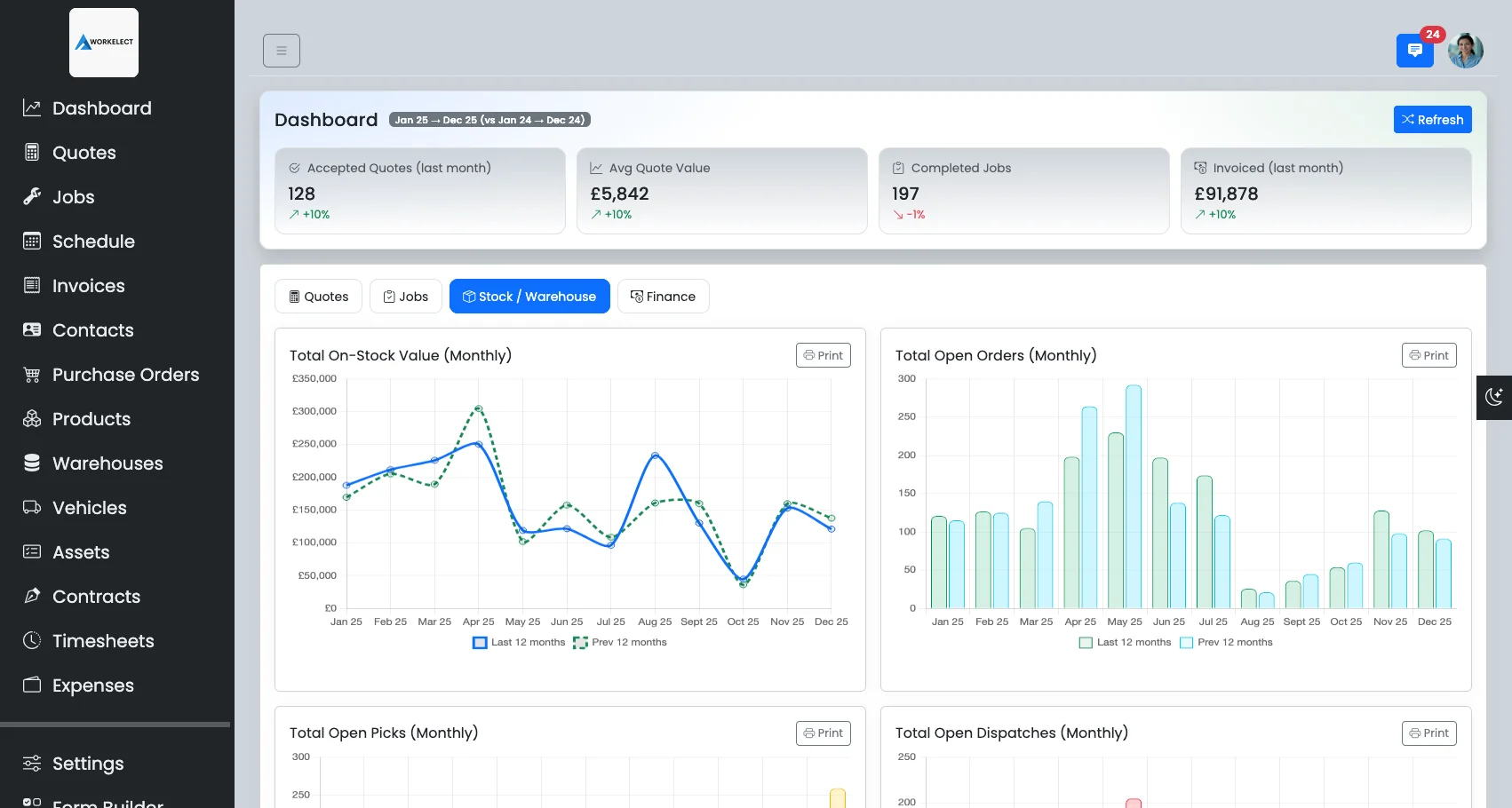
Workelect is built around that operational gap. If your challenge is getting engineers to site with the right parts at the right time, this is where a stock-aware workflow creates the biggest commercial and service impact.
Implementation roadmap for operations leaders
A practical rollout usually starts with one team, one region, or one service line. Define stock ownership, set replenishment thresholds, and establish a weekly review cadence across planning, warehouse, and field supervisors. Start simple, then expand once data quality and team behaviours are stable.
The goal is not just better reporting. The goal is fewer failed jobs and a smoother working day for engineers, coordinators, and customers. When implementation is tied to these outcomes, adoption is faster and improvements are easier to sustain.