Why trade businesses outgrow manual stock control
Many trade businesses begin with informal stock habits. Engineers carry what feels right, depot teams top up when they can, and planners assume availability. That approach is familiar, but it rarely survives growth. As job volume increases, missed stock signals lead to delays, repeat visits, and expensive emergency buying.
Stock management for trades needs a workflow that reflects how work is actually delivered. Jobs drive demand, vans carry execution stock, and depots provide replenishment. When these layers are disconnected, managers spend more time firefighting than improving operations.
Shared challenges across electrical, plumbing, and HVAC teams
Despite technical differences, these trades share operational pressure: short lead times, variable workloads, and high first-visit expectations. A single missing part can break the schedule for an entire day, especially when engineers are already routed across a large area.
Electricians need compliance-critical components. Plumbers rely on fast-moving consumables. HVAC teams depend on seasonal and specialist lines. A practical stock workflow must support all three patterns without creating admin overhead that slows the field.
Building a repeatable trade stock process
Start with role clarity. Define who sets minimums, who approves exceptions, who triggers replenishment, and who validates van counts. Without clear ownership, even good systems drift into inconsistency.
Then connect stock checks to booking cadence. If Tuesday jobs require specific parts, operations should identify shortages before Tuesday morning. That simple planning rule prevents a large proportion of avoidable delays.
Using operational metrics to improve performance
Track first-time-fix rate, repeat visits caused by stock gaps, emergency purchasing volume, and replenishment turnaround time. These indicators reveal where process design is weak and where policy updates can deliver immediate gains.
As trade teams mature, add analysis by engineer, route, and product group. This highlights overstocking, recurring shortages, and demand volatility so managers can adjust with confidence rather than guesswork.
How Workelect supports trade-focused stock control
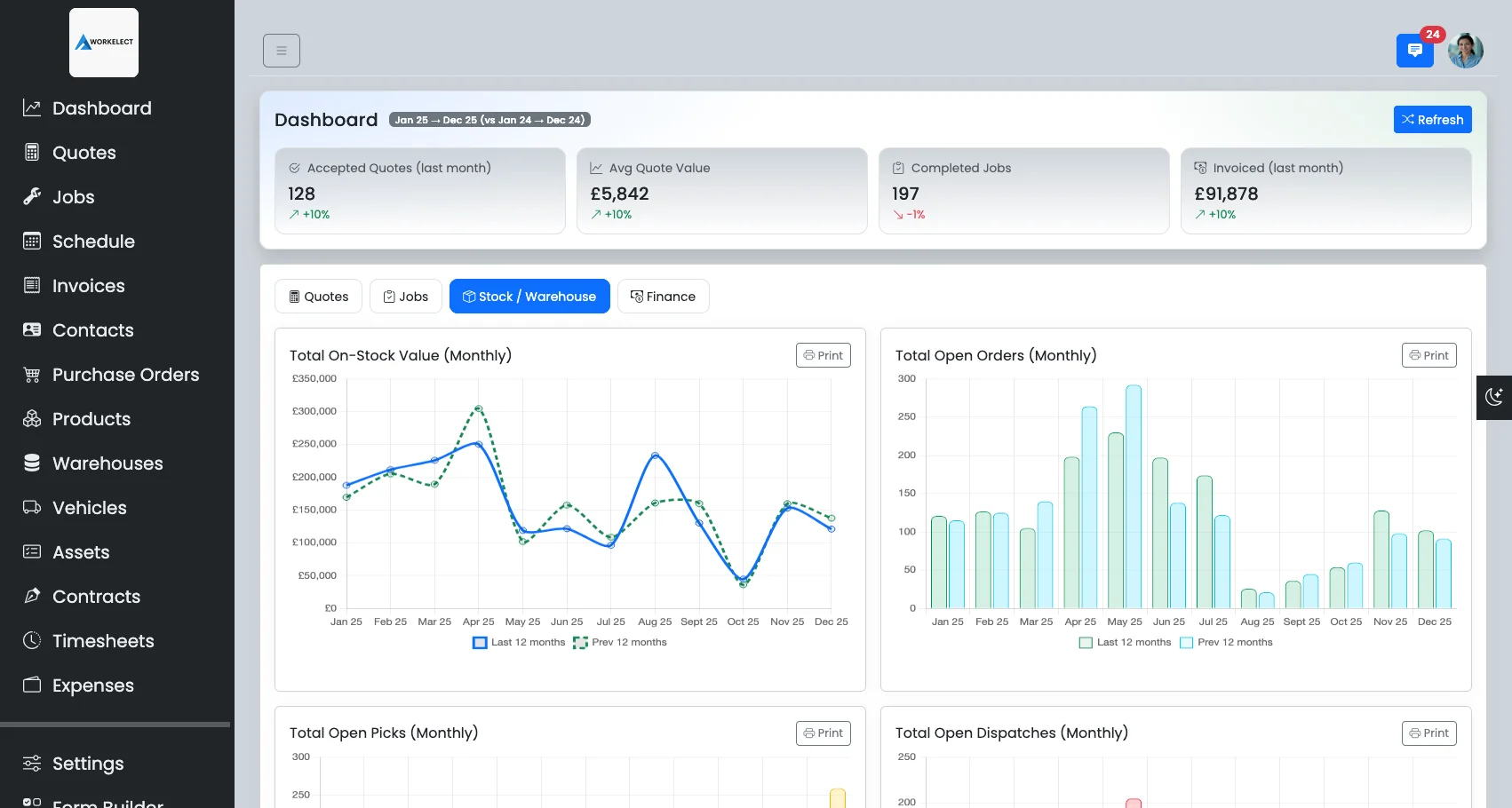
Workelect connects job bookings, depot stock, van inventory, and replenishment actions in one operational environment. Teams no longer need to reconcile multiple spreadsheets before making dispatch decisions.
For growing businesses, this creates stability as complexity increases. If your goal is dependable delivery across electrical, plumbing, and HVAC services, a stock-aware trade workflow is a practical foundation for better performance.
Operational rollout checklist for trade managers
Start with a baseline audit of stock accuracy, repeat visits, and emergency spend. Then introduce standard van profiles by trade, minimum levels for high-use lines, and replenishment ownership for each depot. Keep governance simple and visible so teams know exactly how stock decisions are made.
Review progress weekly against first-time-fix, stockout incidents, and replenishment response time. This keeps improvements tied to outcomes the business can feel immediately, while providing clear evidence that process changes are working.