
Solution

Maintenance Scheduling Software

Schedule maintenance with better visibility into parts, job bookings, assets, and operational readiness so planned work is easier to deliver.

Primary: maintenance scheduling software maintenance management software cmms software field service scheduling software

Why teams choose Workelect

  • Reduce missed maintenance visits caused by stock or readiness gaps.
  • Support clearer planning for recurring maintenance work.
  • Bring maintenance scheduling software closer to live operations and inventory.

Built for operations

Run maintenance scheduling software with one clearer operating view.

Workelect keeps warehouse stock, van stock, job bookings, assets, and readiness aligned so teams spend less time chasing updates.

Schedule maintenance with stock awareness

See whether parts and materials are available before locking in the job.

Support planned and recurring work

Use one system to manage repeat maintenance and reactive demand.

Keep assets and readiness visible

Track the operational context around maintenance work rather than scheduling in the dark.

Deep dive

Maintenance Scheduling Software guide for operations teams.

Detailed guidance for teams evaluating process improvements before software rollout.

Why maintenance scheduling software gets harder as teams scale

Growth increases job volume, field movement, and operational dependencies. Without integrated visibility, planners and engineers spend more time resolving uncertainty than delivering planned work.

See whether parts and materials are available before locking in the job. This is where structured workflows outperform spreadsheet-led coordination, especially when multiple teams share stock and scheduling responsibility.
Operational gaps to close first

The highest-impact improvements are usually simple: clearer stock ownership, earlier readiness checks, and stronger handoffs between planning and field teams.

Use one system to manage repeat maintenance and reactive demand. When these controls are standardised, delivery quality improves and avoidable friction drops across the whole operation.

How teams measure progress with maintenance scheduling software

Track repeat visits, stock-driven delays, emergency purchasing, and planner rework. These measures expose execution quality far better than high-level output totals alone.

As process stability improves, teams usually see predictable gains: reduce missed maintenance visits caused by stock or readiness gaps. and support clearer planning for recurring maintenance work.. Those outcomes are what make software investment commercially meaningful.

Operating profile

Where maintenance scheduling software has the biggest impact.

A practical profile of team shape, delivery pressure, and the buying trigger behind this workflow.

Best-fit team

Maintenance planners coordinating preventive schedules with reactive interruptions.

Daily job mix

Recurring maintenance, statutory visits, urgent repairs, and follow-up tasks.

Most common bottleneck

Planned schedules are frequently displaced by unstructured reactive demand.

Buying trigger

Preventive completion rates drop while emergency work keeps rising.

Workflow sequence

How teams run maintenance scheduling software day to day.

A concrete execution sequence from planning through close-out.

1. Plan maintenance windows

Set schedule bands by asset criticality, access windows, and technician skill.

2. Reserve execution capacity

Protect planned slots with resource and stock validation in advance.

3. Absorb reactive change

Re-sequence work with clear rules that preserve preventive coverage.

4. Track schedule health

Monitor slippage, overdue trends, and reactive displacement each week.

Operational KPIs

What to measure in the first 90 days.

Use these metrics to confirm whether process changes are improving delivery quality.

Preventive completion

Target: 95%+ monthly

Keeps asset reliability from degrading under reactive pressure.

Overdue maintenance

Target: Reduce by 30%

Lower overdue volume reduces compliance and service risk.

Reactive displacement

Target: Cut by 20%

Protects planned work from constant reprioritisation.

Execution signals

What good implementation looks like.

Indicators teams use to validate that the new workflow is genuinely embedded.

  • Planned work is protected with explicit readiness checks and capacity gates.
  • Reactive insertion rules are visible so schedule trade-offs are controlled.
  • Weekly schedule health metrics show whether planning is improving or drifting.
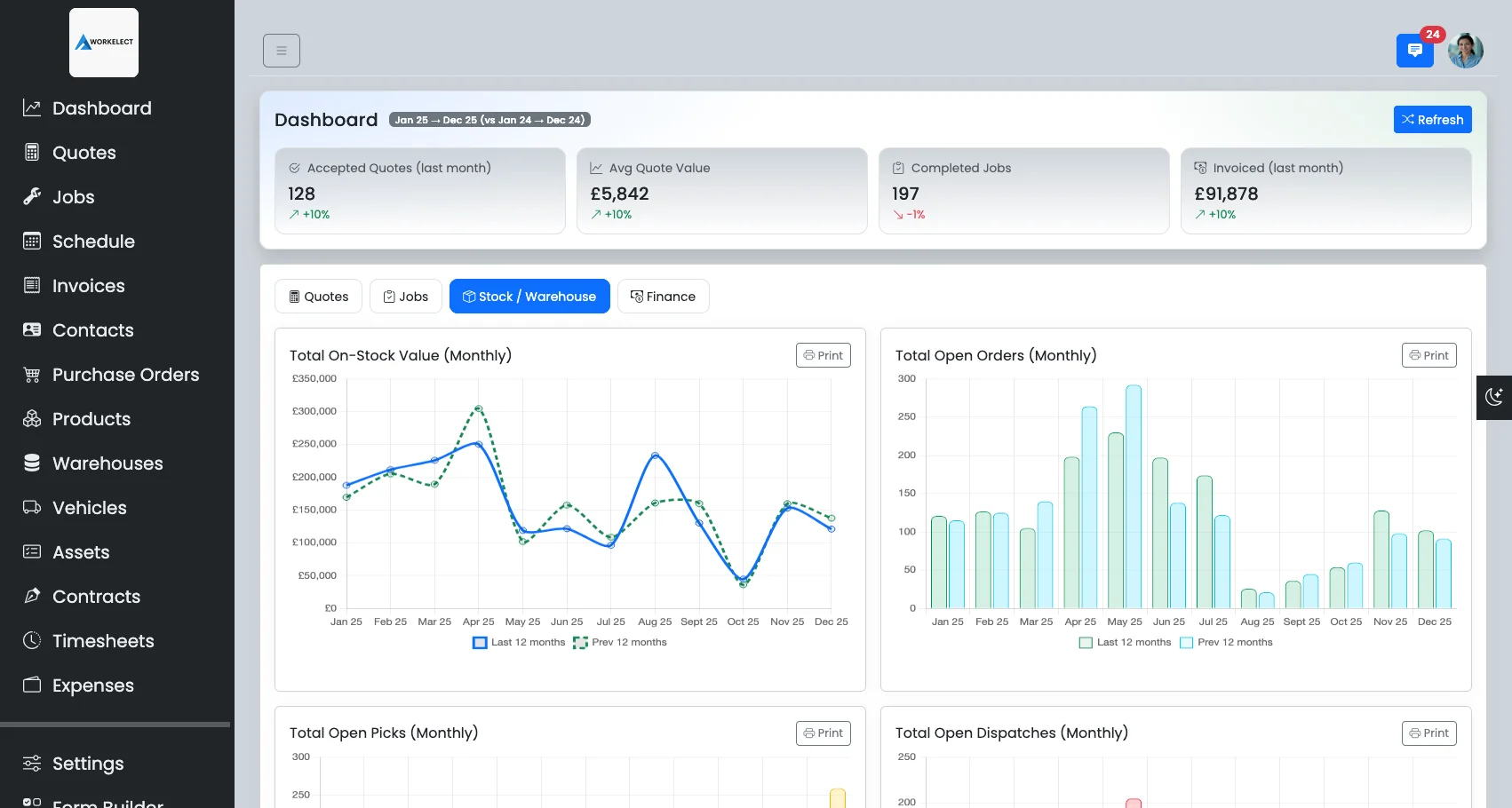
Maintenance Scheduling Software dashboard preview

What this covers

Maintenance Scheduling Software

Workelect helps teams connect stock visibility, booking control, and day-of-work readiness in one operational view.

  • maintenance management software
  • cmms software
  • field service scheduling software
  • cmms inventory management

Related links

Explore related Workelect pages.

Follow connected pages across software, industries, product information, and blog content.

FAQ

Maintenance Scheduling Software questions

Short answers to common questions around this workflow.

It helps teams plan and coordinate maintenance work, including recurring tasks, reactive jobs, and operational scheduling.

Yes. It is built to connect maintenance job bookings with stock, assets, and field execution.

Yes. Warehouse and vehicle stock visibility can support maintenance planning decisions.

See Workelect in action

Bring stock, job bookings, assets, and field readiness into one platform.

Start a 14 day trial or contact us to talk through your workflow.