Why generic FSM is often not enough
Traditional FSM tools are strong at scheduling and status tracking, but many treat stock as a secondary module. This creates a critical execution gap: jobs are planned confidently even when required parts are unavailable.
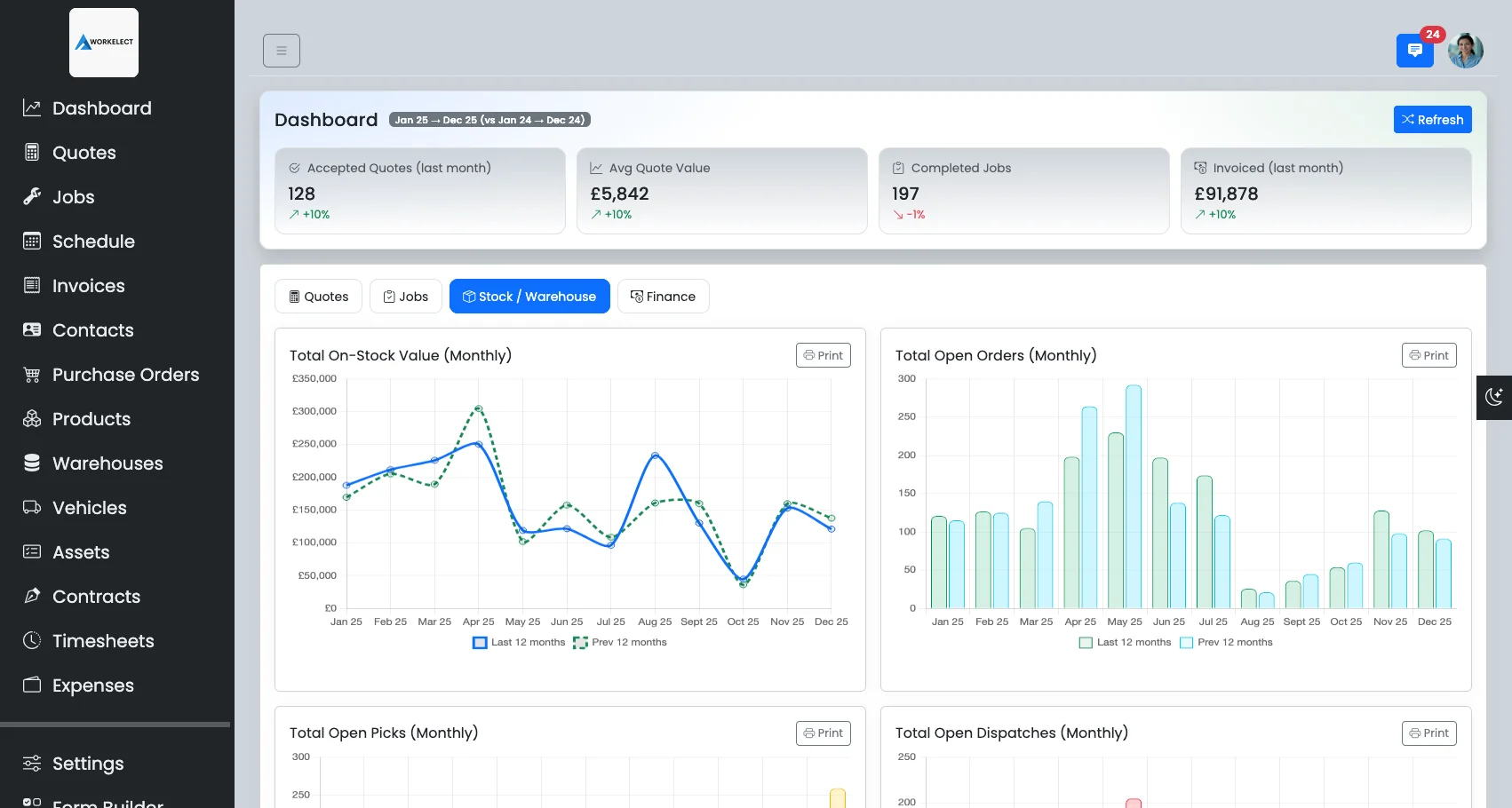
FSM software with stock control closes that gap by making inventory part of planning, dispatch, and completion workflows. Teams can then schedule with realistic readiness data rather than assumptions.
Connecting dispatch decisions to inventory signals
Dispatchers make high-impact decisions every hour. If they cannot see stock constraints, they unknowingly set engineers up for avoidable failure. A stock-aware FSM surface should highlight shortages, substitutions, and replenishment timing at dispatch point.
This improves route quality and customer communication, because teams can commit to jobs that are genuinely ready to complete.
Use case depth across electrical, plumbing, and HVAC
Electricians benefit from reserve-and-verify workflows for safety-critical components. Plumbers benefit from high-velocity consumable controls. HVAC teams benefit from lead-time visibility and planned staging of specialist parts.
One platform can support all three if it uses role-based workflows and clear stock ownership between planning, warehouse, and field teams.
Commercial impact of stock-aware FSM
When jobs and stock are managed together, repeat visits decrease, emergency spend drops, and engineer time is used more productively. These gains compound quickly in operations with high daily booking volume.
Leaders also gain better forecasting because inventory demand is linked directly to upcoming work rather than inferred from historical averages alone.
What to look for during evaluation
Prioritise systems that handle warehouse stock, van stock, replenishment, and booking workflows in one environment. Ensure the tool supports practical day-of-work decisions, not only end-of-day reporting.
Workelect is designed around execution readiness. If your priority is reducing failures caused by missing stock while keeping dispatch agile, this category fit is essential.
How to implement FSM plus stock control safely
Roll out in phases with clearly defined owners for planning, stock policy, and replenishment execution. Start with high-impact workflows where stock failures are frequent, then extend to wider teams once operational confidence improves.
Use weekly operational reviews to monitor first-time-fix, stockout-driven delays, and emergency spend. This keeps the programme focused on execution outcomes rather than feature adoption alone.
Questions to pressure-test before go-live
Can planners see part shortages before dispatch? Can warehouse teams action replenishment queues without duplicate data entry? Can managers identify which jobs failed because of stock readiness? If these answers are unclear, the workflow still needs refinement before scale.
Pilot with real job bookings, real engineers, and real part movements. Simulated workflows often hide friction that appears on busy days. A short, realistic pilot provides far better evidence than a feature checklist alone.